
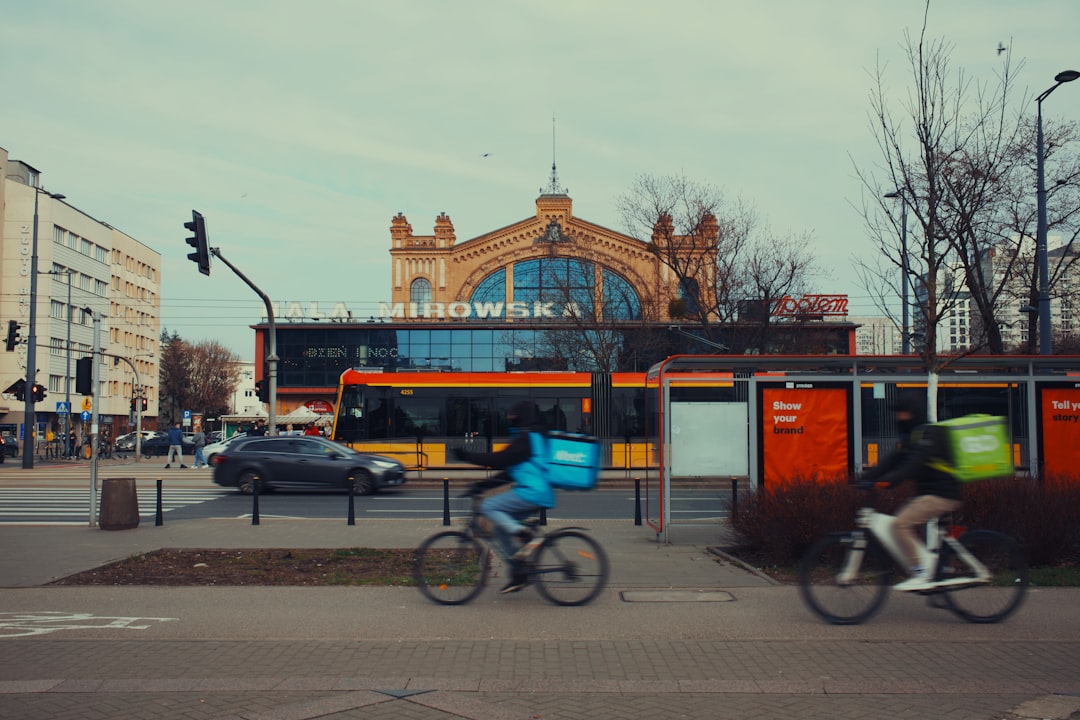
Can You Bring a Bike on Warsaw Metro? 2026 Rules
Learn if you can take a bike on Warsaw metro in 2026, dispel peak-hour myths, and get practical tips for expats about rules and etiquette.
Can you bring a bike on Warsaw metro? Yes, you can, and the basic rules remain friendly in 2026. However, passengers must follow a few conditions to avoid conflicts with other riders and staff.
Rules for a bike on Warsaw metro
First, the city treats a bicycle as ordinary luggage. Consequently, operators do not charge extra for it. Moreover, you still need a valid ticket for yourself. Therefore, do not try to travel without a ticket. In addition, the municipal regulations (the transport bylaw adopted by the City Council) set these rules.
Second, you must board through the first or last doors of a train. These areas host space for larger baggage and single bicycles. However, staff and inspectors often call out riders who use other doors. Therefore, follow the rule to avoid a confrontation.
Third, people in wheelchairs and passengers with strollers have absolute priority in the space. Consequently, you must give up the spot on demand. Moreover, staff can require you to leave the train to make room for a wheelchair user or a parent with a pram.
When staff can refuse entry
There is no blanket ban on bike travel in rush hours on the metro. However, the operator may limit bike access during heavy crowding. In addition, train crew, traffic control, or ticket inspectors can decide on the spot. Therefore, treat the bike rule as a privilege you should use sensibly. If the staff denies boarding, they act for safety reasons.
Also remember that you remain responsible for your bike. If your bicycle damages the vehicle or injures someone, you face liability. In Poland, a fine is a ‘mandat’. Moreover, legal processes sometimes reference IDs such as PESEL (national ID number). Therefore, carry ID documents whenever possible.
Folding bikes and other modes
Foldable bicycles count as hand luggage after you collapse them. Consequently, you can take them into any vehicle at any time. Moreover, they represent the easiest solution for daily commuters. In addition, rules differ in other public transport modes. For example, buses and trams reserve space near the second door from the driver’s cabin. Meanwhile, commuter trains (SKM, Koleje Mazowieckie) mark zones or provide bike hooks.
For daily users, three practical points matter most. First, the ride stays free for the bike while you hold a ticket. Second, board by the first or last doors. Third, always make way for wheelchairs and prams. Therefore, you avoid most problems.
Remember the common myth about peak-hour bans. Many guides confuse the metro with the suburban WKD line. Consequently, passengers often avoid metro morning trips unnecessarily. However, the WKD enforces a strict ban on bikes during weekday rush hours (06:30-08:30 and 14:30-16:30). The metro does not enforce the same rule.
Finally, choose off-peak travel for comfort. Moreover, folding bikes give full freedom of schedule. Therefore, combine cycling and metro travel with minimal stress.
Source: Read original article
📚 Looking for more help settling in Poland? Browse our complete Expat Guides.