
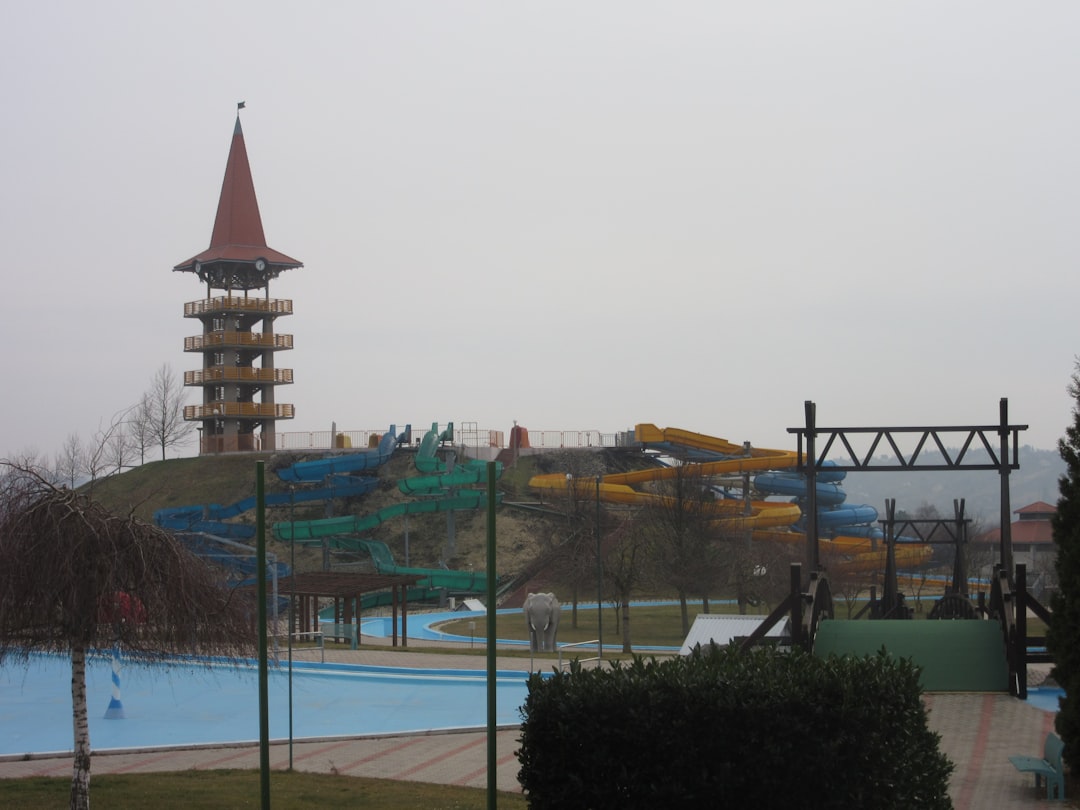
Abandoned aquapark: UFO landing site in Silesia
An unfinished aquapark project in Maciejów, Zabrze — locally dubbed the ‘UFO landing site’ — stands as a reminder of stalled development in Silesia and raises questions about safety, ownership and local regeneration.
The abandoned aquapark site in the Maciejów district of Zabrze — nicknamed by locals the “UFO landing site” — remains an unfinished relic of plans hatched two decades ago to build a major water park for the region. The stalled structure is not just a local curiosity: it illustrates broader issues around development, investment risk and urban blight in post-communist Polish cities.
What was planned and what exists today
Around 20 years ago, residents of Zabrze imagined a modern complex that would rival the then-only similar facility on Upper Silesia, the water park in Tarnowskie Góry. The proposal included a large swimming pool with hydromassage, colourful paddling pools for children and a set of slides designed to make Maciejów a regional leisure destination and a node for family outings. Today, however, the site stands as a half-built concrete skeleton surrounded by overgrown lots — the picture of an investment abandoned mid-course.
Why projects like this fail
There is rarely a single reason for the failure of major local developments. In Poland, stalled construction can result from a combination of funding shortfalls, developer bankruptcy, changing local political support, difficulties obtaining or maintaining permits, and shifting market demand. Smaller cities like Zabrze are particularly vulnerable: they may lack the steady tourist flow and private capital that sustain large leisure projects in bigger urban centres. In some cases, plans are launched during boom times but collapse when the economic outlook changes.
Local cost and future possibilities
Beyond the visual blight, unfinished projects raise concrete concerns for residents and local authorities: safety hazards from unsecured structures, environmental degradation, and lost opportunity costs — land that could otherwise be used for housing, parks or smaller-scale community amenities. Yet such sites can also attract creative reuse. Across Poland and Europe, abandoned industrial or leisure sites have been converted into community parks, pop-up cultural venues, or phased residential developments, if ownership is clarified and funding arranged.
Source: Read original article