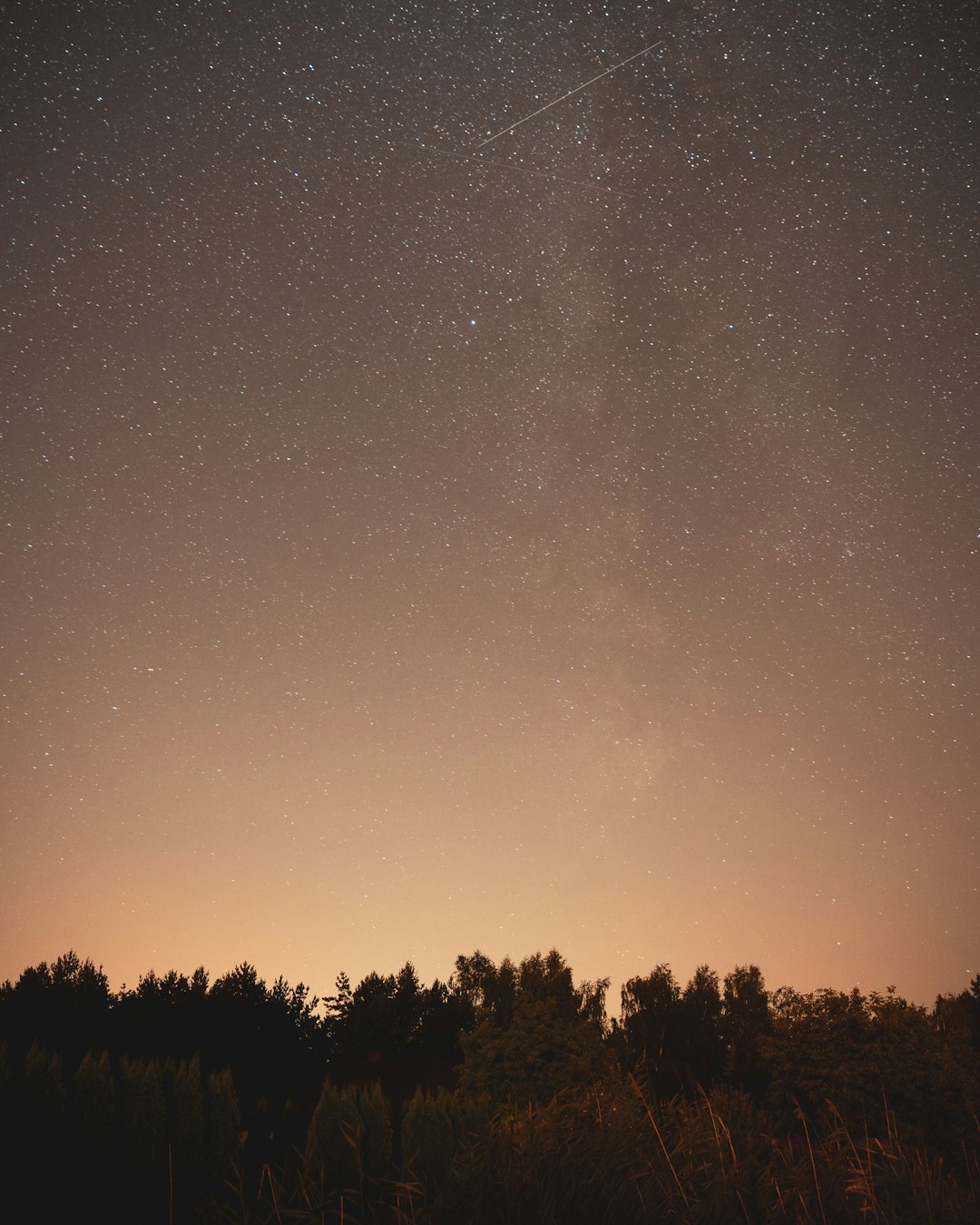
Spectacular bolide lights up eastern Poland
A bolide over eastern Poland dazzled observers and cameras on April 1. Skytinel data reveal a comet-like orbit and no meteorite fall.
A spectacular bolide over eastern Poland streaked across the night on April 1 at 20:40. Skytinel, a network of amateur astronomers and camera operators, captured the event.
Trajectory of the bolide over eastern Poland
Skytinel reports that the fireball crossed Podlaskie, Mazovia, and Lublin voivodeships. Moreover, the event began above 100 kilometres near Wysokie Mazowieckie. However, the luminous trail ended around 73 kilometres above Parczew. In addition, the path passed close to Drelów. Consequently, residents who saw a flash or heard nothing unusual likely observed the same object.
What Skytinel recorded
The network recorded the phenomenon with 12 stations. Moreover, five stations provided especially precise measurements. Therefore, analysts could calculate a detailed trajectory and orbital elements. In addition, calculations show the object moved on a highly elongated orbit. Consequently, its orbit resembles that of comets rather than typical meteoroids. Moreover, Skytinel estimates a roughly 31-year orbital period. In addition, the object’s perihelion lay closer to the Sun than Earth’s orbit. However, its aphelion extended beyond Saturn. Therefore, its orbit also showed a large inclination to the plane of the Solar System. In addition, the fireball entered the atmosphere at about 35 km/s. Consequently, it hit at a shallow angle and burned up quickly. Therefore, Skytinel says total ablation likely occurred. In addition, analysts say that the small mass and fragile structure made any surviving fragment impossible. However, the flash offers rare scientific value despite the lack of meteorites.
Why scientists and residents care
The event interests scientists because cometary fragments tell us about the early Solar System. Moreover, the high speed and unusual orbit provide data on how such bodies evolve. In addition, networks like Skytinel fill gaps in formal monitoring. Therefore, they help both professional astronomers and civil authorities. However, for ordinary residents, the main question is safety. Consequently, locals want to know whether to look for fragments. In addition, authorities remind the public not to touch any found material. Moreover, meteorite handling requires expertise and proper procedure.
Skytinel’s rapid and multi-station response provided a clear scientific picture. Moreover, the network shows how grassroots monitoring contributes to public knowledge. However, this bolide produced science rather than meteorites. Therefore, observers can still appreciate a rare sky show.
Source: Read original article